
The Invisible Architecture of Direction: Beyond the Printed Arrow
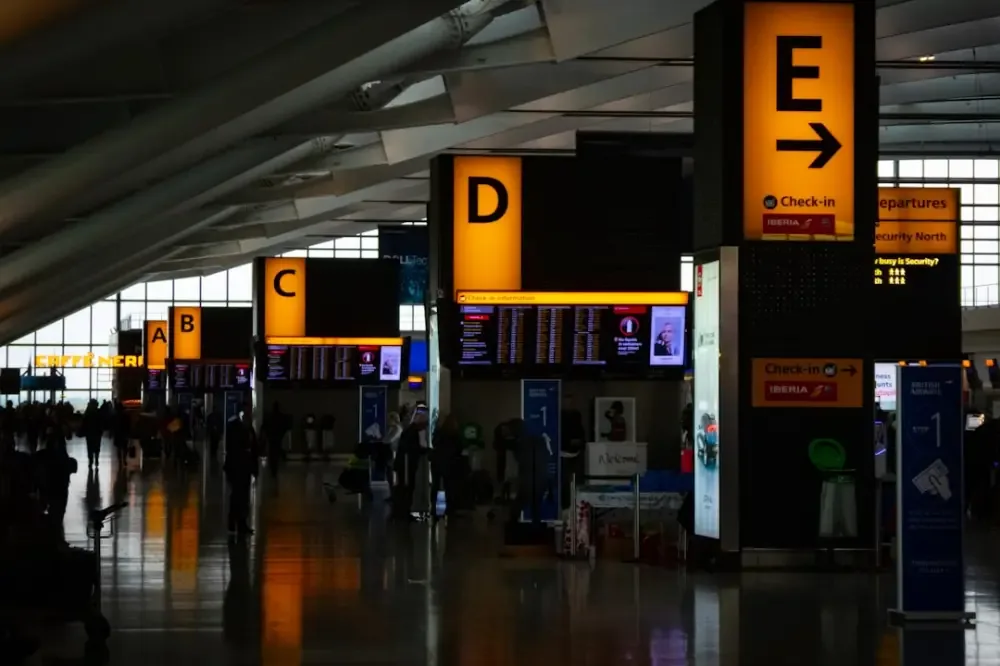
When we think of wayfinding, our minds immediately conjure images of airport terminals, hospital hallways, and the ubiquitous yellow-on-black signs that tell us where to find Gate B12 or the Radiology department. In the traditional design lexicon, wayfinding is often reduced to signage—a sub-discipline of graphic design focused on typography, iconography, and color contrast. However, as our understanding of spatial cognition and inclusive design evolves, a new consensus is emerging: wayfinding is not just about reading signs; it is about how we experience and inhabit space.
True wayfinding is an invisible architecture. It is the subtle dialogue between a person and their environment. When a space is designed effectively, the signs are merely the final confirmation of a decision the user has already made based on intuition, sensory cues, and psychological landmarks. In an era where accessibility is becoming the cornerstone of creative excellence, rethinking wayfinding as a multi-sensory experience is no longer optional—it is essential.
The Cognitive Map: How We Actually Navigate
To understand why wayfinding transcends signage, we must first look at the psychology of navigation. Human beings do not move through the world like computers processing a list of instructions. Instead, we build what psychologists call 'cognitive maps.' These are mental representations of our physical environment, constructed through a series of landmarks, paths, nodes, and edges.
A sign is a reactive tool; it solves a problem once the user is already looking for help. Proactive wayfinding, however, uses the physical layout of a building to guide movement. Consider the use of light: a bright atrium at the end of a corridor naturally draws people forward, acting as a beacon without a single word of text. Similarly, the use of floor materials—shifting from a hard, echoing tile to a soft, muffled carpet—can signal a transition from a public thoroughfare to a quiet, private zone. These are the 'silent signs' that define our spatial experience.
The Sensory Layer: Navigation Through Touch and Sound
At BlindArt, we often discuss how creativity is defined by sensory experience beyond vision. Wayfinding is perhaps the most practical application of this philosophy. For individuals with visual impairments, or even for a sighted person in a crowded, chaotic environment, the reliance on visual signage is a point of failure. Inclusive wayfinding leverages the full spectrum of human perception.
- Acoustic Wayfinding: The sound of a water feature can act as a permanent landmark, helping users orient themselves in a large plaza.
- Tactile Paving: Changes in floor texture (truncated domes or directional bars) provide critical information about upcoming hazards or decision points.
- Olfactory Cues: While less common in formal design, the scent of a coffee shop or a specific garden can serve as a subconscious marker of location.
- Haptic Feedback: In modern smart-city initiatives, vibrations through a smartphone or wearable device can guide a user through a complex transit hub.
By diversifying the cues we use to signal direction, designers create a more resilient system. When a space speaks to multiple senses, it becomes more navigable for everyone, regardless of their physical abilities or the language they speak.
Psychology of Space: Reducing the Cognitive Load
One of the primary goals of wayfinding is to reduce 'environmental stress.' When people are lost, they experience a spike in cortisol and a decrease in cognitive function. This is particularly critical in high-stress environments like hospitals or emergency exits. In these moments, the brain struggles to process complex information.
Effective wayfinding design prioritizes the reduction of cognitive load. This is achieved through 'progressive disclosure'—giving the user only the information they need at the exact moment they need it. A sign listing 40 different departments is a failure of wayfinding; a clear path that leads to a central hub where the next step is revealed is a success. The goal is to create a 'legible' environment, where the function of a space is immediately apparent from its form.
The Four Pillars of Effective Wayfinding
- Orientation: Does the user know where they are in relation to the whole?
- Route Decision: Are the choices at a junction clear and limited?
- Route Monitoring: Does the user feel they are still on the right path while moving between points?
- Destination Recognition: Is it obvious when the user has arrived at their goal?
Inclusive Wayfinding as a Creative Opportunity
The shift away from sign-centric design is not a limitation; it is a creative opportunity. When designers stop relying on arrows, they are forced to engage with the materiality of the world. They must consider the height of a ceiling, the curve of a wall, and the temperature of a light source. They must design for the 'whole human,' acknowledging that our perception is a complex, multi-modal process.
In the context of inclusive design, wayfinding becomes a bridge between art and utility. It is an expression of empathy. By asking, 'How would someone who cannot see this sign find their way?', we uncover more intuitive, elegant solutions that benefit everyone. A wide, sweeping curve in a hallway is more than an aesthetic choice; it is a physical gesture that guides the body. A high-contrast color scheme is more than a branding exercise; it is a vital tool for someone with low vision.
Conclusion: Navigating the Future
As our built environments become increasingly complex, the need for sophisticated wayfinding will only grow. However, the future of navigation lies not in more signs, but in smarter, more integrated design. We are moving toward an era of 'spatial intelligence,' where buildings are designed to be intuitively understood through every sense we possess.
Wayfinding is ultimately about dignity. It is about providing individuals with the autonomy to navigate the world without having to constantly ask for help. When we look beyond the signs, we see that wayfinding is actually about the fundamental human desire to understand our place in the world and to move through it with confidence and ease. For the modern designer, the challenge is to make the world not just readable, but truly feelable.